
Turning Passion Into Pay: Practical Paths to Getting Discovered as a Creative
/Creatives—artists, designers, writers, filmmakers, musicians—share a common problem: talent alone doesn’t guarantee discovery. The solution isn’t louder self-promotion; it’s building a clear trail from what you make to who needs it. When discovery becomes repeatable, income follows.
Core Insights
● Visibility grows when your work is easy to recognize, understand, and share.
● Consistency beats virality when you’re building a sustainable income.
● Discovery accelerates when you combine creative output with basic business skills.
● Showing how you work can be as powerful as showing what you’ve finished.
Starting With a Recognizable Creative Identity
If someone stumbles across one piece of your work, they should immediately understand who you are and what you do. That doesn’t require a rigid brand, but it does require coherence. Choose a few defining themes, aesthetics, or problems you love solving, and let those guide what you publish.
This clarity helps collaborators and clients decide quickly whether you’re a fit. When they don’t have to guess, they’re more likely to reach out.
Sharing the Process, Not Just the Polish
Audiences connect deeply with the story behind the work. Short clips, time-lapses, drafts, or behind-the-scenes commentary invite people into your creative world. This kind of content builds trust and familiarity, which are often the deciding factors in paid opportunities.
Creating these videos doesn’t have to be complex. By using an AI video generator, you can simply enter a descriptive text prompt and have a customized video clip produced for sharing across platforms where discovery happens.
Where Discovery Often Begins
Most paid opportunities don’t come from everywhere at once. They usually come from one or two channels you show up in consistently and use well:
● A primary platform where your audience already spends time.
● A personal site or portfolio that explains your work in plain language.
● Communities or forums where peers and clients already gather.
Pick one or two and commit. Depth creates momentum faster than scattered effort.
Habits That Increase Your Chances of Being Found
The following actions work best when treated as a routine rather than a one-off push:
● Publish work or insights on a predictable schedule.
● Respond publicly to comments and questions.
● Collaborate with peers whose audiences overlap with yours.
● Revisit and refine older work instead of constantly starting from scratch.
Building Skills That Support Your Art
Many creatives struggle not because of weak work, but because of weak systems. Understanding pricing, contracts, marketing, and client management can dramatically change your earning potential. Education doesn’t replace creativity; it protects it.
Going back to school for a business management degree can sharpen your ability to sell and sustain your work by strengthening leadership, operations, and project management skills. Choosing an online program makes it easier to keep creating while you study, instead of putting your career on pause. To learn more, research accredited programs.
How Discovery Becomes Sustainable
Before you worry about growth hacks, align your basics:
● Define the type of work you want to be hired for.
● Make three examples of that work easy to find online.
● Explain your process in a short written or video format.
● Invite contact with a clear next step.
● Repeat this cycle monthly, adjusting based on responses.
Choosing Discovery Channels
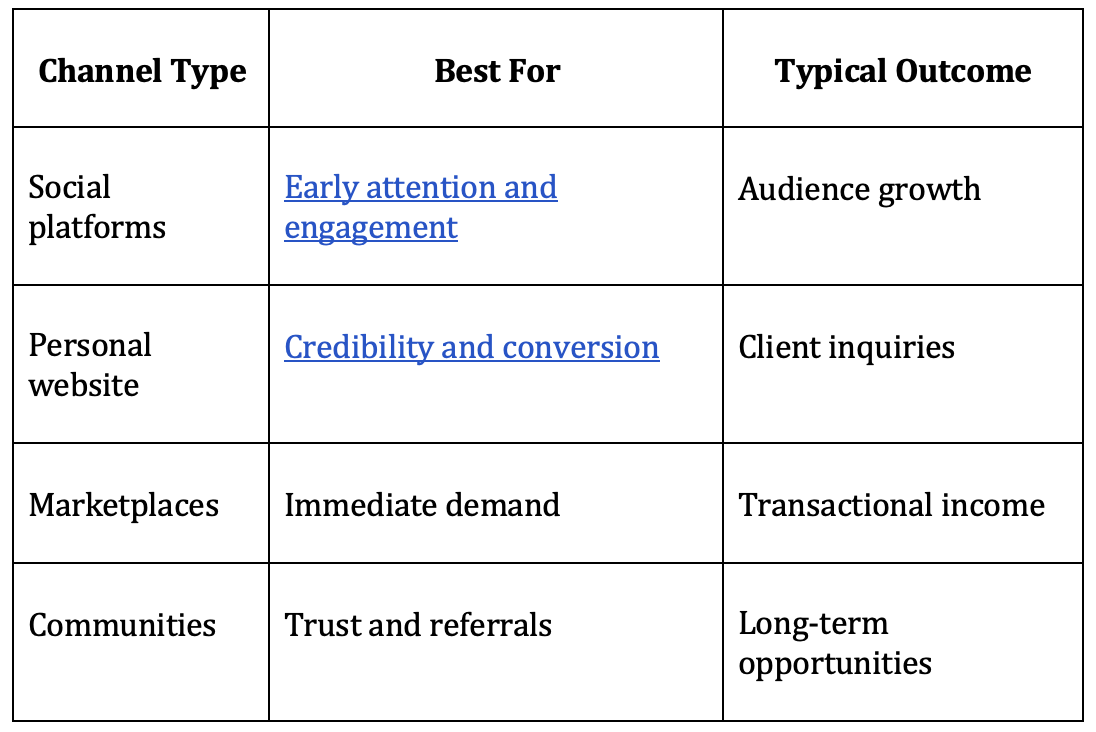
Different channels support different goals. This overview helps clarify expectations:
Questions Creatives Ask Before Going All In
Before committing fully, many creatives want clarity on practical outcomes.
Can I really make a living from my creative work?
Yes, but income usually grows from systems, not single breakthroughs. Most sustainable careers are built from repeat clients, referrals, and diversified revenue streams. Discovery is the gateway, but consistency keeps it open.
How long does it take to get noticed?
Timelines vary widely depending on niche, output, and effort. Some see traction in months; others take years. Progress accelerates when your work is clear, findable, and easy to understand.
Do I need to be on every platform?
No. One strong platform is better than five neglected ones. Choose where your audience already is and show up well there.
Is sharing unfinished work risky?
It can feel vulnerable, but it often increases trust. People hire creatives they feel connected to, not just impressed by. Process content humanizes your skill.
Should I invest in education or tools first?
Invest where your biggest gap is. If you struggle with pricing or pitching, education pays off. If creation speed or quality is the bottleneck, tools may help more.
What’s the clearest sign discovery is working?
When opportunities start coming to you instead of you chasing them. Inquiries, referrals, and repeat work are stronger signals than likes or views.
Bringing It All Together
Getting discovered as a creative isn’t about shouting louder; it’s about making yourself easier to find, understand, and trust. When your work, process, and skills align, discovery becomes less random and more reliable. Over time, that reliability is what turns passion into a living.
Article by: Emma Brown